Investment basics

Mutual funds
At PrimeInvestor, we love mutual funds and consider them to be an ideal investment vehicle for regular investors. We have several portfolios and recommendations tailored to mutual fund investors.
At PrimeInvestor, we love mutual funds and consider them to be an ideal investment vehicle for regular investors. We have several portfolios and recommendations tailored to mutual fund investors.


Mutual fund categories – There is no dearth to the number of schemes that each mutual fund comes out with. In order to bring in uniformity and facilitate easier comprehension for investors, SEBI has designed categories for mutual fund schemes, along with broad guidelines for each.
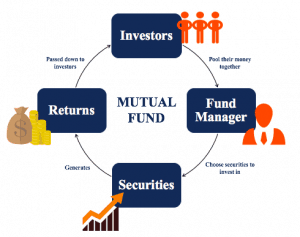

What are mutual funds? Mutual funds as an investment alternative has been gaining prominence over the decade. Since it is integral to gain more information about it before investing, this article seeks to act as a starting point in your mutual fund journey.

A blue chip (or blue-chip or bluechip) stock or blue chip companies is a persistently recurring term in stock market jargon. Let’s look into what it actually means.


In tough times such as this, it is hard to see your investment value dwindling. And when that happens to your debt funds, it is even harder. We’ve had quite a few queries on whether it is safe now to park money in liquid funds and very short duration funds and whether it should be withdrawn.


Several mutual funds that held Yes Bank’s perpetual bonds had to mark a loss, and this is a loss that can’t be recovered, as things stand. In this scenario, we’ve had many questions over the quantum of fund exposure to AT1 bonds. So here are the numbers.


Desperate times call for desperate measures. Therefore, Indian fixed income investors may need to brace for a further plunge in interest rates in the coming months. • With rates cuts likely, lock into the options mentioned here, before March 31, 2020.


Given that the Nifty50 is busy taking out new lows with stunning rapidity, what are the Nifty levels at which the market gets really cheap, or attractive to invest lumpsums in? This strategy note is an attempt to answer this question

If you’ve got a 5-year-plus timeframe, equity is the way to go as we explained this week. And if you need money in the very near term, we’ve asked you to stay safe with fixed deposits, liquid funds, and ultra short-term funds. But what about the in-between timeframe? What are your options should you have a horizon of 2-3 years and want better returns that fixed deposits or low-risk debt funds?

Do you remember the last time that the Nifty fell over 500 points on a single day? Wondering if it was in 2008? No, because it never did in absolute value terms. That’s what makes March 9, 2020’s Nifty fall so scary.

RBI’s rescue package for Yes Bank, which will see SBI infusing capital into the bank to pick up 49 % of its equity, offers a breather to its depositors and shareholders. But one class of stakeholders who are set to take a comprehensive haircut valued at Rs 10,800 crore despite the bailout, are the holders of Additional Tier 1 (AT1) bonds in the bank.

When an equity fund is founded on the philosophy of value investing, seeks to reduce volatility through limited hedging and provides international flavour where such opportunities are not available locally, we call it an all-in-one fund. The fund we are talking of also has an expense ratio lower than the equity category average, considering its relatively small AUM size.
Hold On
You are being redirected to another page,